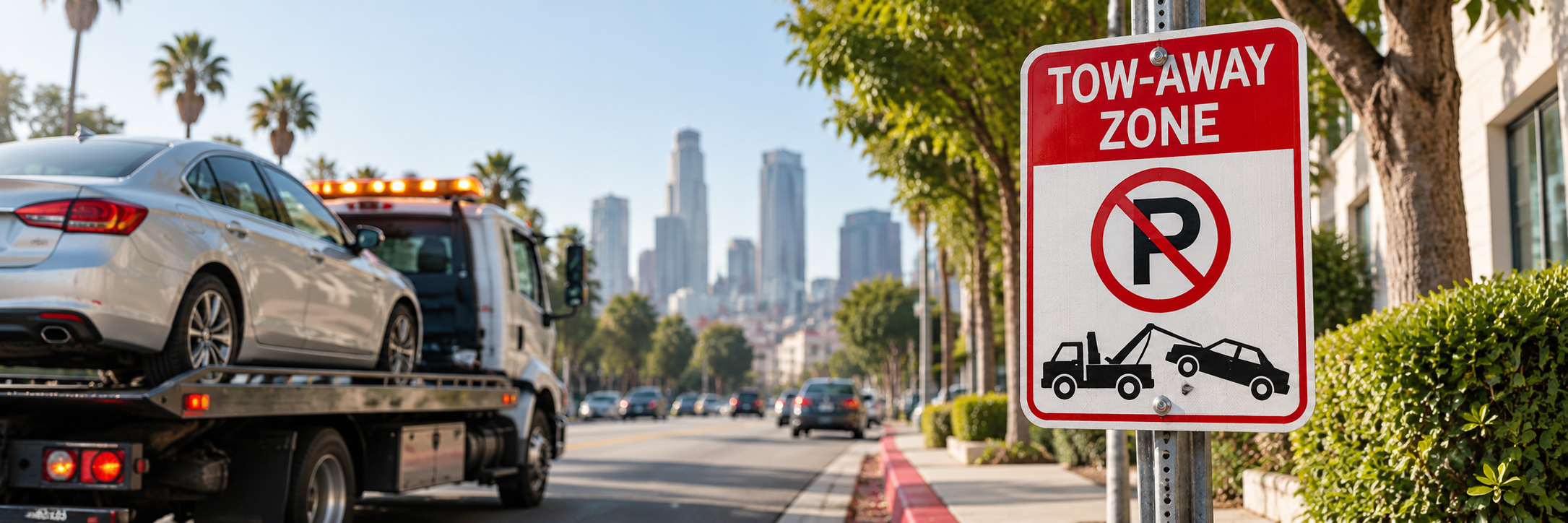
Tow-away zone signs can be intimidating because parking in the wrong place may result in more than a parking ticket — your vehicle could potentially be towed.
If you’re wondering, “Can I park in a tow-away zone?” the answer depends on exactly what the posted signs say and when the tow-away restriction applies.
Before leaving your vehicle, check the sign’s hours, days, arrows, exceptions, and any additional parking restrictions posted at the location.
What Is a Tow-Away Zone?
A tow-away zone is an area where authorities may remove vehicles that violate an applicable parking or stopping restriction.
However, seeing the words “Tow Away” does not necessarily mean parking is prohibited at all times.
The tow-away provision may apply only when another restriction is active, such as No Parking during certain hours, street cleaning, rush-hour restrictions, temporary restrictions, or other posted rules.
That makes the time and wording on the entire sign especially important.
Can You Park in a Tow-Away Zone?
Sometimes — depending on the posted restriction.
A sign may designate an area as a tow-away zone only during particular hours or days. Outside those restricted periods, parking may be allowed if no other rule prohibits it.
Before parking, check:
- When the tow-away restriction applies
- Whether the sign says No Parking, No Stopping, or another restriction
- The days and hours listed
- Whether arrows define the restricted area
- Whether exceptions appear on the sign
- Whether other signs apply to the same parking space
Never interpret “Tow Away” separately from the rest of the parking sign.
Does “Tow Away” Mean No Parking at Any Time?
Not necessarily.
A tow-away warning often describes how authorities may enforce another parking restriction rather than creating a 24-hour parking prohibition by itself.
For example, a sign might prohibit parking during certain hours and designate the area as a tow-away zone during those hours.
Outside the stated restriction, different parking rules may apply.
Always read the complete sign before deciding whether you can park.
What Is the Difference Between No Parking and Tow Away?
No Parking describes a parking restriction.
Tow Away generally warns of a potential enforcement consequence when a vehicle violates an applicable restriction.
That distinction matters because a sign can contain both instructions.
If you’re unsure about the differences between parking restrictions, see our guide to No Parking vs. No Standing vs. No Stopping.
Can You Park in a Tow-Away Zone After Hours?
Possibly.
If the tow-away restriction applies only during specified hours, the space may become available outside those hours — provided another restriction does not prohibit parking.
For example, a location could have one restriction during rush hour and another later in the day.
Check every applicable sign before leaving your vehicle.
What Do Arrows on Tow-Away Signs Mean?
Parking sign arrows can indicate where a restriction begins, ends, or continues along the curb.
This becomes particularly important with tow-away zones because the restriction may apply only to a specific section of the street.
Do not assume the rule applies equally on both sides of the sign.
See ParkClear’s guide to parking sign arrows for more help interpreting directional parking restrictions.
What If There Are Multiple Tow-Away and Parking Signs?
Multiple signs can create several restrictions for the same curb space.
One sign might establish a tow-away restriction during particular hours while another controls street cleaning, permit parking, loading, or time-limited parking.
Read the signs together and determine which restrictions apply to the specific day and time you want to park.
Our guide to multiple parking signs explains how to work through overlapping parking restrictions.
Can Street Cleaning Be a Tow-Away Restriction?
Street-cleaning rules vary by jurisdiction and location.
Some areas prohibit parking during scheduled street-cleaning periods, and enforcement consequences can differ depending on local rules and posted signs.
If street cleaning appears alongside a tow-away warning, carefully check the applicable day and time before parking.
See our guide to street cleaning parking signs for more information.
Can Your Car Be Towed From a Tow-Away Zone?
Potentially, yes.
Whether authorities can tow a vehicle depends on the applicable law, posted restriction, location, circumstances, and local enforcement rules.
A tow-away warning should therefore receive extra attention. If you are uncertain whether a restriction is active, verify the posted rules and applicable local requirements before leaving your vehicle.
How ParkClear Helps With Tow-Away Zone Signs
Tow-away signs can combine several pieces of information: days, hours, arrows, parking restrictions, and enforcement warnings.
ParkClear helps drivers understand confusing parking signs and street parking rules.
Scan a parking sign or use your location to get a clear Yes or No answer to the question: “Can I park here?”
ParkClear can also help with parking situations involving multiple parking signs, parking sign arrows, street cleaning, loading zones, permit parking, and other street parking restrictions.
The Bottom Line: Can You Park in a Tow-Away Zone?
You may be able to park in an area marked as a tow-away zone when the applicable restriction is not in effect and no other parking rule prohibits it.
Never rely on the words “Tow Away” alone. Check the complete sign, applicable hours and days, arrows, exceptions, and other restrictions affecting the space.
When parking signs are difficult to interpret, ParkClear is designed to make the rules easier to understand.
Download ParkClear
Confused by parking signs? Download ParkClear to scan parking signs or use your location to get a clear Yes or No answer to “Can I park here?”
Parking regulations and towing rules vary by jurisdiction. Always follow posted signs and applicable local laws, and check official local rules when necessary.