
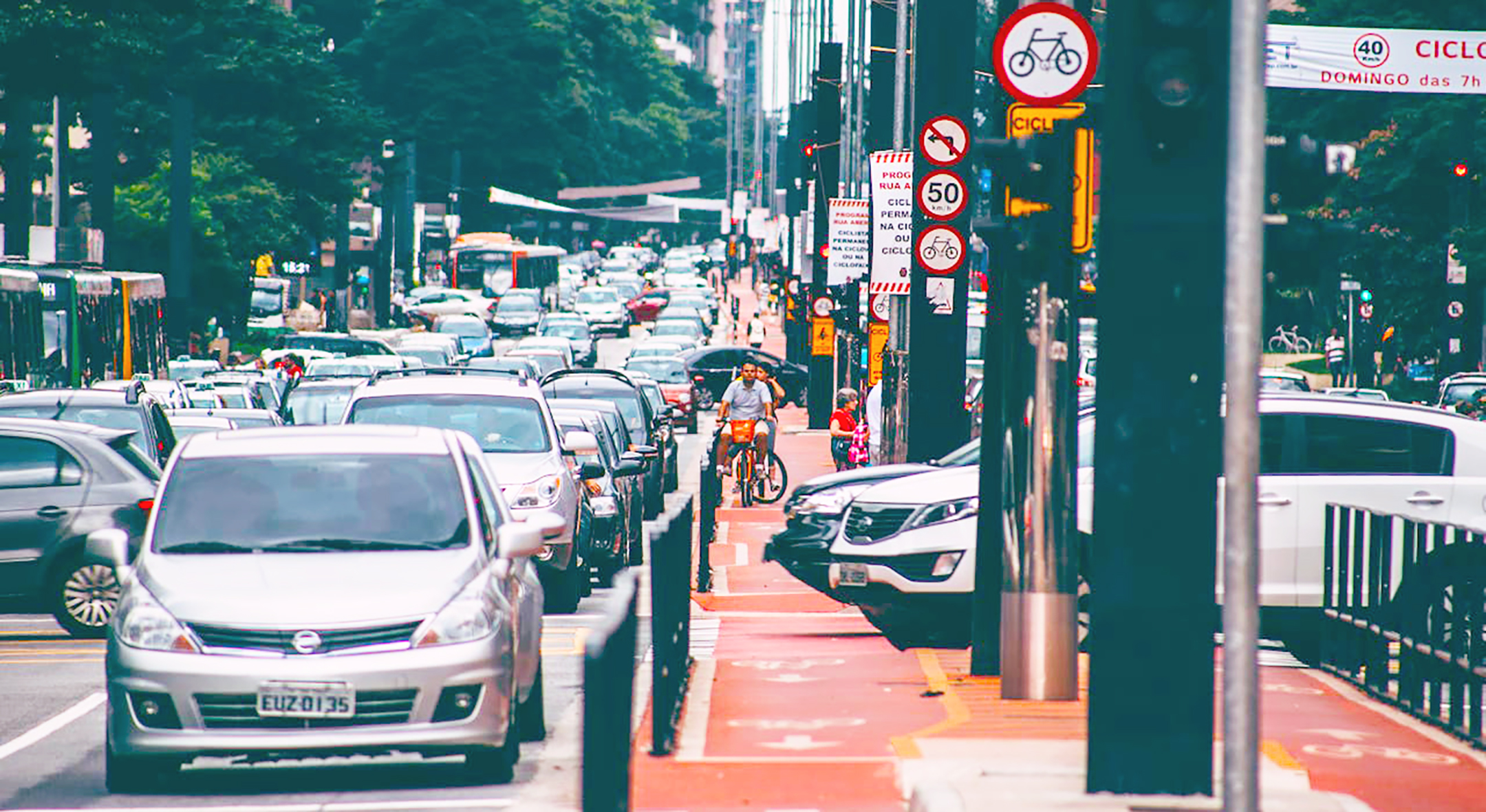
Street parking seems like it should be simple: find a legal space, park your vehicle and continue with your day.
In dense cities, it rarely works that way.
Drivers may encounter multiple parking signs on one pole, regulations that change by time of day, street-cleaning schedules, permit zones, loading areas and temporary restrictions—all within a few blocks.
The challenge isn’t simply finding somewhere to park. It’s determining whether a particular curb space is legal for your vehicle at the time you need it.
Here are five of the biggest urban parking challenges and why understanding street-parking regulations has become increasingly important.
1. Parking Signs Can Be Difficult to Interpret
One of the most obvious challenges is also one of the most frustrating: parking signs.
A single sign may be relatively straightforward.
The difficulty increases when several regulations apply to the same curb.
A driver might encounter a two-hour parking limit, a residential permit restriction and a street-cleaning schedule on the same pole.
Each rule may apply on different days or during different hours.
Directional arrows can add another layer by determining exactly where a restriction begins and ends.
The result is that drivers aren’t always answering one question. They’re combining several pieces of information to determine whether parking is permitted.
Our guide to multiple parking signs explains how to approach overlapping regulations.
2. Parking Rules Change Throughout the Day
A legal parking space isn’t necessarily legal indefinitely.
Many urban parking regulations are time-dependent.
A curb may allow general parking during one part of the day and become restricted later because of rush-hour regulations, residential permit requirements or another scheduled rule.
Street cleaning creates the same problem on a larger time scale. A vehicle parked legally overnight could become illegally parked when a morning restriction begins.
This makes when you plan to leave just as important as when you arrive.
Drivers should check the entire intended parking period rather than only the regulations currently in effect.
Our guide to overnight parking rules explains why future restrictions matter when leaving a vehicle for an extended period.
3. One Curb Can Serve Several Different Purposes
Urban curb space is limited, but cities need it for far more than general parking.
The same street may need space for passenger loading, commercial deliveries, buses, accessible parking, emergency access and other uses.
Cities communicate many of these purposes through curb colors and parking signs.
For drivers, this means an empty curb isn’t necessarily an available parking space.
A loading zone may appear unused but still be restricted during its posted hours. A red curb may prohibit stopping or parking even when there are no nearby vehicles.
Understanding what the curb is designated for is therefore an important part of determining whether you can park.
Our guides to parking curb colors and loading zone parking rules explain these restrictions in more detail.
4. Parking Rules Can Change From One Block—or City—to Another
Drivers often develop habits based on the parking rules they’re familiar with.
That can become a problem when traveling between neighborhoods or municipalities.
Parking regulations are established and administered locally, which means meter schedules, permit programs, street-cleaning restrictions and other rules can differ by jurisdiction.
Southern California provides an easy example.
Santa Monica is its own city with its own parking system, while neighboring Venice is part of the City of Los Angeles.
A driver can travel a short distance and encounter a different municipal parking framework.
Even within the same city, regulations can vary from block to block.
That’s why drivers should rely on the rules applying to their actual location rather than assuming the regulations are the same as somewhere nearby.
For examples, compare our Santa Monica parking guide with our Venice Beach parking guide.
5. Temporary Restrictions Can Override Normal Parking Conditions
Even if you understand a street’s normal parking regulations, temporary conditions can change them.
Cities may restrict parking for construction, street maintenance, filming, special events or other activities.
A block that normally allows parking may temporarily become a No Parking or tow-away zone.
These restrictions can be particularly easy to miss when a driver has parked on the same street many times before.
Before leaving your vehicle, check for newly posted temporary notices and confirm their dates and enforcement hours.
If you’re parking for several hours or overnight, make sure a temporary restriction doesn’t begin before you plan to return.
Read our guide to temporary No Parking signs for more information.
Why Finding an Empty Space Isn’t Enough
Urban parking is sometimes discussed primarily as a problem of parking availability.
For drivers, however, availability and legality are two different questions.
An empty curb space might be restricted by a permit zone, street-cleaning schedule, loading designation or temporary No Parking notice.
Likewise, paying a meter doesn’t necessarily mean your vehicle can remain there for as long as you’d like.
The practical question isn’t simply:
Is there an empty space?
It’s:
Can I legally park in this space for the time I need it?
That distinction is central to understanding urban street parking.
Why Digital Parking Rules Are Becoming More Important
Cities are increasingly digitizing different parts of their parking and curb infrastructure.
Meters can accept digital payments. Permits can be managed electronically. Curb regulations can increasingly be represented as structured data.
These developments create opportunities to make parking information easier for drivers to understand.
But technology doesn’t eliminate the underlying complexity.
The challenge is connecting the driver’s location, the applicable regulations and the relevant date and time in a way that produces a useful answer.
Our article on the future of urban parking explores how digital curb information is changing city parking systems.
How ParkClear Approaches the Urban Parking Problem
ParkClear focuses on one specific part of the urban parking challenge: understanding municipal street-parking regulations.
Using parking-sign scanning and location-based parking information, ParkClear helps drivers answer:
Can I park here?
Instead of requiring drivers to interpret every restriction independently, ParkClear is designed to translate applicable parking rules into a clear Yes or No answer.
Future date and time checks can help drivers evaluate whether a space will remain legal later, while parking-expiration reminders help users keep track of their permitted parking period.
ParkClear doesn’t locate vacant parking spaces, provide live occupancy information or offer turn-by-turn navigation.
Its focus is helping drivers understand the rules governing the curb they’ve chosen.
Learn more about the ParkClear parking sign scanner.
Making Urban Parking Easier to Understand
Cities will always need rules governing how limited curb space is used.
The challenge for drivers is understanding those rules quickly enough to make the right decision.
Complicated signs, changing schedules, different curb uses, local regulations and temporary restrictions can turn a seemingly simple parking decision into a surprisingly complicated one.
Better access to clear parking information can make that decision easier.
Confused about whether you can park? Download ParkClear to scan parking signs or use your location to get a clear Yes or No answer to “Can I park here?”
Parking regulations vary by jurisdiction. Always follow posted signs and applicable local laws, and check official local rules when necessary.