
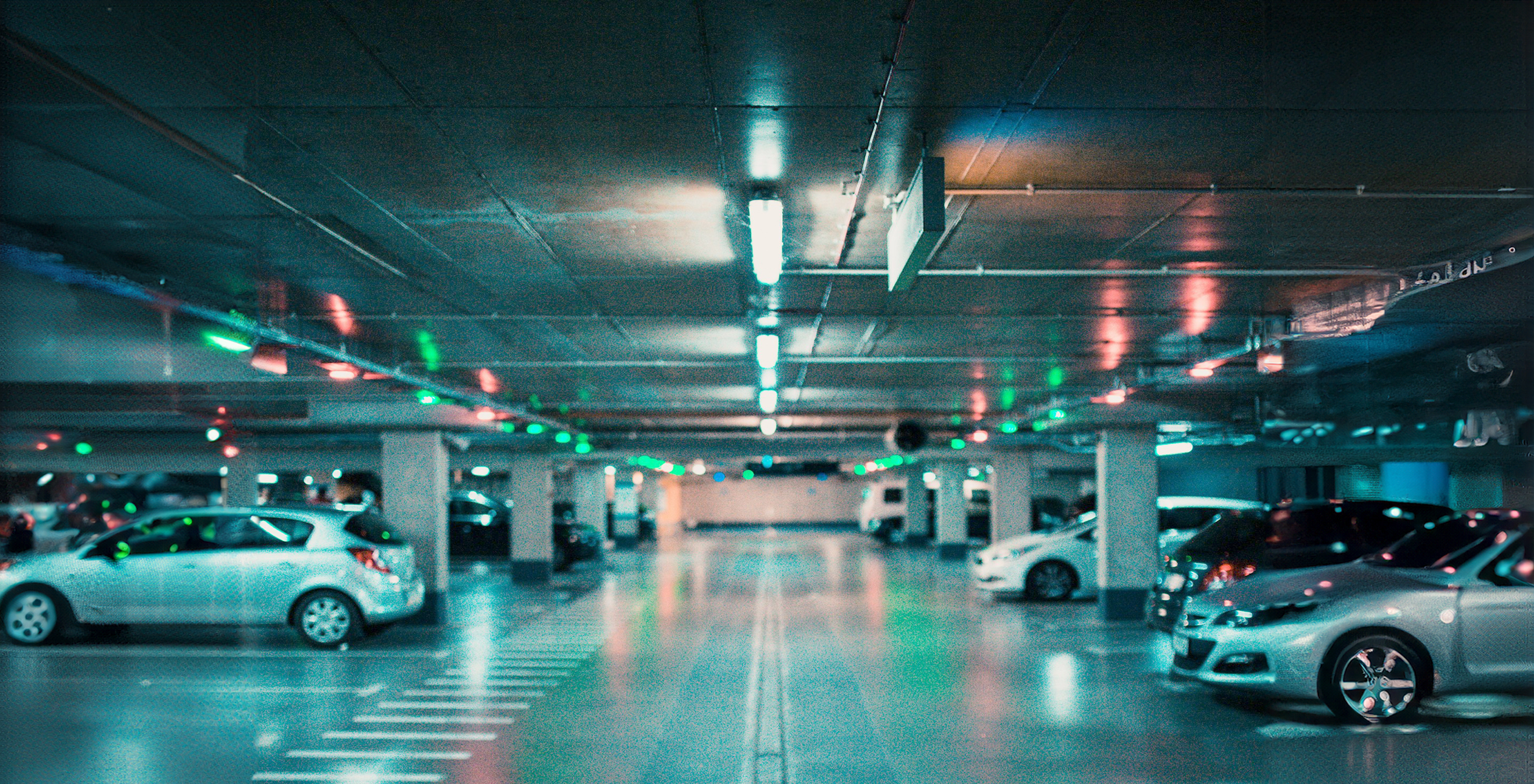
Parking in a city used to be mostly physical.
A curb. A meter. A painted line. A parking sign.
Those things still matter, but the systems behind them are becoming increasingly digital.
Cities are managing curb space for more than traditional street parking. The same stretch of curb may need to accommodate passenger loading, commercial deliveries, buses, bicycles, accessible access, temporary restrictions, street cleaning, permit parking, and ordinary vehicle parking—sometimes at different times of the same day.
That makes the future of urban parking about much more than finding an empty space.
It is increasingly about understanding what the curb can be used for, who can use it, and when.
As cities digitize parking information and curb regulations, technology has the potential to make those rules easier to manage—and easier for drivers to understand.
Why Is Urban Parking Becoming More Complicated?
A city curb is valuable public space.
One section of curb might allow general parking during part of the day but operate as a loading zone during another period. Another might prohibit parking during street cleaning, require a residential permit overnight, or temporarily become unavailable because of construction or an event.
The Federal Highway Administration describes curbside management as a data-driven approach to allocating curb space for different users and purposes. Dynamic curb management can take that concept further by changing curb uses according to time, demand, and agency priorities.
For drivers, however, those changing uses often appear in a very familiar form:
parking signs.
Sometimes lots of them.
A single pole may contain different restrictions for different days and times. If you’ve encountered this situation, ParkClear’s guide to how to read multiple parking signs on one pole explains how to separate overlapping rules and determine which ones apply.
As curb management becomes more dynamic, communicating those rules clearly becomes increasingly important.
What Is Smart Parking?
“Smart parking” can describe several different technologies.
Some systems monitor parking-space occupancy. Others handle payments, reservations, enforcement, garage management, or dynamic pricing.
Those technologies shouldn’t all be treated as the same thing.
Another important area is digital curb and parking-rule information—turning regulations that traditionally exist on physical signs, municipal records, schedules, and curb markings into information that digital systems can interpret.
That distinction matters.
Knowing that a physical space exists is not the same as knowing whether you are legally allowed to park there.
A curb may physically be empty while parking is prohibited because of:
- Street cleaning
- A permit restriction
- A loading period
- A time limit
- A temporary restriction
- A tow-away period
- A No Parking or No Stopping rule
- Another location-specific regulation
The future of parking technology therefore isn’t simply about answering:
Where is there space?
It can also help answer:
What are the rules here?
The Curb Is Becoming Digital
One of the most important developments in urban parking is the effort to represent curb regulations digitally.
The Open Mobility Foundation’s Curb Data Specification, for example, provides a standardized way for cities to digitally publish curb locations and regulations so that curb information can be communicated between public agencies and technology systems.
This points toward an important shift.
Traditionally, a driver might have to stand beside a car and manually interpret:
NO PARKING
7 AM–9 AM
MON–FRI
along with:
2 HOUR PARKING
9 AM–6 PM
and perhaps another restriction for street cleaning.
The rules themselves aren’t necessarily changing because they’re digital.
What’s changing is the possibility that computers can increasingly understand, organize, communicate, and apply those rules.
For drivers, that could eventually make complicated curb regulations easier to understand.
Why Time Matters as Much as Location
Urban parking isn’t static.
The answer to “Can I park here?” can change even when the vehicle never moves.
Consider a curb that allows two-hour parking during the afternoon but prohibits parking during morning rush hour.
Same location.
Different time.
Different rule.
A street-cleaning restriction can create the same problem. A space that is otherwise available for parking may become restricted during a particular window.
Our guide to street cleaning parking signs explains why drivers need to consider the posted day and time rather than simply whether a street sweeper has already passed.
Even an apparently simple 2-hour parking sign may require checking hours, days, arrows, exceptions, and other restrictions.
This time-dependent nature of curb rules is one reason digital parking information has so much potential.
A useful parking system needs to understand not just:
WHERE
but also:
WHEN.
Temporary Parking Rules Add Another Layer
Cities aren’t static either.
Construction happens.
Utilities perform street work.
Moving trucks need curb access.
Special events change traffic patterns.
Film productions, maintenance work, and other temporary activities can alter how a curb may be used.
That means the normal rule for a parking location may not always be the rule that applies today.
A temporary no parking sign can change whether a normally legal parking space may be used for a particular date or time.
This illustrates one of the larger challenges facing future parking systems:
Parking information needs to account for change.
Static databases alone may not capture every temporary condition affecting a real street.
The more cities digitize temporary and permanent curb regulations, the more useful that information can potentially become for drivers, city agencies, mobility providers, and other curb users.
Parking Signs Still Matter
Digitization doesn’t mean physical signs suddenly become irrelevant.
For drivers, officially posted signs and local regulations remain critical sources of parking information.
Parking signs communicate restrictions such as:
- No Parking
- No Standing
- No Stopping
- Street cleaning
- Time limits
- Permit requirements
- Loading zones
- Tow-away restrictions
- Directional boundaries
Even curb colors can carry different meanings depending on the jurisdiction. ParkClear’s guide to red, yellow, white, green, and blue curb colors explains why drivers should consider both curb markings and nearby signs.
Similarly, No Parking, No Standing, and No Stopping can represent different restrictions.
The future isn’t necessarily about replacing signs.
It’s about making the information represented by those signs easier to interpret and use.
Computer Vision Can Help Bridge the Physical and Digital Worlds
One challenge with parking regulations is that important information still exists physically on the street.
That’s where image analysis and computer vision can play a role.
A parking sign contains structured information:
restriction + day + time + direction + exception
Technology can help identify and organize those elements so drivers don’t have to decipher everything manually.
ParkClear’s parking sign scanner is built around this idea.
Drivers can photograph nearby parking signs, and ParkClear analyzes the signage together with relevant location information to help provide a clear Yes or No parking decision.
That represents a different branch of parking technology from systems designed to identify vacant parking spaces.
The objective isn’t to tell a driver that an empty space exists.
It’s to help answer:
Can I legally park here?
Location-Aware Parking Information Is Becoming More Important
Parking rules are inherently geographic.
A rule in one city may differ from a rule in another.
Even two sides of the same street can have different restrictions.
And two vehicles parked several spaces apart may potentially fall under different directional signs.
This makes location an important part of digital parking interpretation.
ParkClear combines location information with applicable parking rules and, when necessary, parking-sign analysis to simplify the decision.
Instead of requiring a driver to manually combine:
location + sign + day + time + arrow + exception
the goal is to make the final question much simpler:
Can I park here?
The Future of the Curb Is About More Than Cars
Modern curb space has many competing users.
Depending on the street and time of day, cities may need to accommodate:
- Private vehicles
- Delivery vehicles
- Passenger loading
- Public transportation
- Accessible parking
- Bicycles
- Micromobility
- Ride-hailing pickup and drop-off
- Commercial loading
- Emergency access
Federal transportation guidance describes curb management as a way to allocate this limited space among changing uses. In practice, a curb might serve freight loading in the morning, restrict parking during peak traffic, support passenger loading later, and permit longer-term parking at another time.
That means tomorrow’s curb may increasingly function less like a permanent parking lane and more like flexible urban infrastructure.
And the more flexible the curb becomes, the more important clear parking information becomes.
Can Smarter Curb Management Support More Sustainable Cities?
Parking and sustainability are connected, but the relationship deserves careful explanation.
Transportation agencies have explored parking-management strategies intended to improve the use of parking facilities and curb space, while better loading-zone management can help reduce problems such as double parking and conflicts with traffic.
Technology can also help cities understand how curb space is being used and make more informed decisions about how that limited public space should be allocated.
But no single parking app is going to solve urban congestion or climate change.
The more realistic opportunity is for better parking and curb information to become one component of a broader transportation system—alongside public transit, walking, cycling, freight management, electric vehicles, and other mobility strategies.
For ParkClear, the contribution is focused:
make confusing street-parking regulations easier for drivers to understand.
What Will Happen to Parking Meters and Payments?
Payments are another area of continuing change.
Coins gave way to multi-space meters and payment kiosks. Many jurisdictions now support mobile payments, license-plate-based systems, or other digital payment methods.
Some parking systems also use variable or demand-responsive pricing.
Those technologies solve a different problem from parking-rule interpretation.
A driver may successfully pay a meter and still need to understand whether another restriction affects the space.
For example, a temporary restriction could prohibit parking during certain hours even where a meter normally operates.
That’s why the future parking ecosystem will likely involve multiple technologies working alongside one another:
payments + regulations + enforcement + curb data + vehicle/location information + user-facing applications.
No single layer tells the entire story.
What About Automated and Connected Vehicles?
Connected and increasingly automated vehicles add another reason parking regulations need to become machine-readable.
A human driver can look at a sign and attempt to interpret it.
A digital transportation system needs structured information it can process.
Questions such as these become increasingly important:
Where may a vehicle stop?
Where may passengers be picked up?
When is a curb reserved for loading?
When does a temporary restriction begin?
Which part of the block does a rule apply to?
As vehicles and transportation systems become more connected, digital curb regulations could become an increasingly important part of the infrastructure that helps machines interact with city streets.
Why Parking Rules Are a Data Problem
Consider what a driver may need to determine before leaving a vehicle:
LOCATION
Where exactly is the car?
RULE
What activity is allowed or prohibited?
DAY
Does the restriction apply today?
TIME
Is it active right now?
DIRECTION
Which section of curb does the rule cover?
EXCEPTIONS
Does a permit, vehicle type, holiday, or other condition change the rule?
OTHER RESTRICTIONS
Is another sign, curb marking, temporary notice, or local rule also relevant?
That’s not simply a sign-reading problem.
It’s a data interpretation problem.
And that is where technology has the opportunity to make urban parking dramatically easier to understand.
Where ParkClear Fits Into the Future of Urban Parking
ParkClear isn’t a parking-space occupancy service and doesn’t provide turn-by-turn navigation to vacant parking spaces.
Its focus is different.
ParkClear helps drivers understand municipal street-parking rules.
Using location-based parking information and parking-sign analysis, ParkClear is designed to turn complicated parking regulations into a clearer Yes or No parking decision.
Drivers can also use ParkClear to check parking rules for a future date and time and set parking-expiration reminders.
The technology addresses one deceptively difficult part of urban mobility:
Understanding whether you’re allowed to park where you are.
As cities continue digitizing curb regulations and parking information, that problem becomes increasingly suited to technology.
From Smart Parking to Smart Curbs
The future of urban parking won’t be defined by one app, one sensor, one payment system, or one type of vehicle.
It will involve an increasingly connected ecosystem.
Cities will manage curb space.
Digital systems will communicate regulations.
Payment platforms will handle transactions.
Enforcement technology will help cities administer rules.
Vehicles will become more connected.
And drivers will still need a simple answer to a surprisingly complicated question:
Can I park here?
That’s the opportunity at the center of ParkClear.
Not finding an imaginary empty space.
Not replacing municipal regulations.
But making complicated street-parking information easier to understand.
Because as the curb becomes smarter, the experience of using it should become simpler too.
Confused about whether you can park? Download ParkClear to scan parking signs or use your location to get a clear Yes or No answer to “Can I park here?”
Parking regulations vary by jurisdiction. Always follow posted signs and applicable local laws, and check official local rules when necessary.


5 Comments