
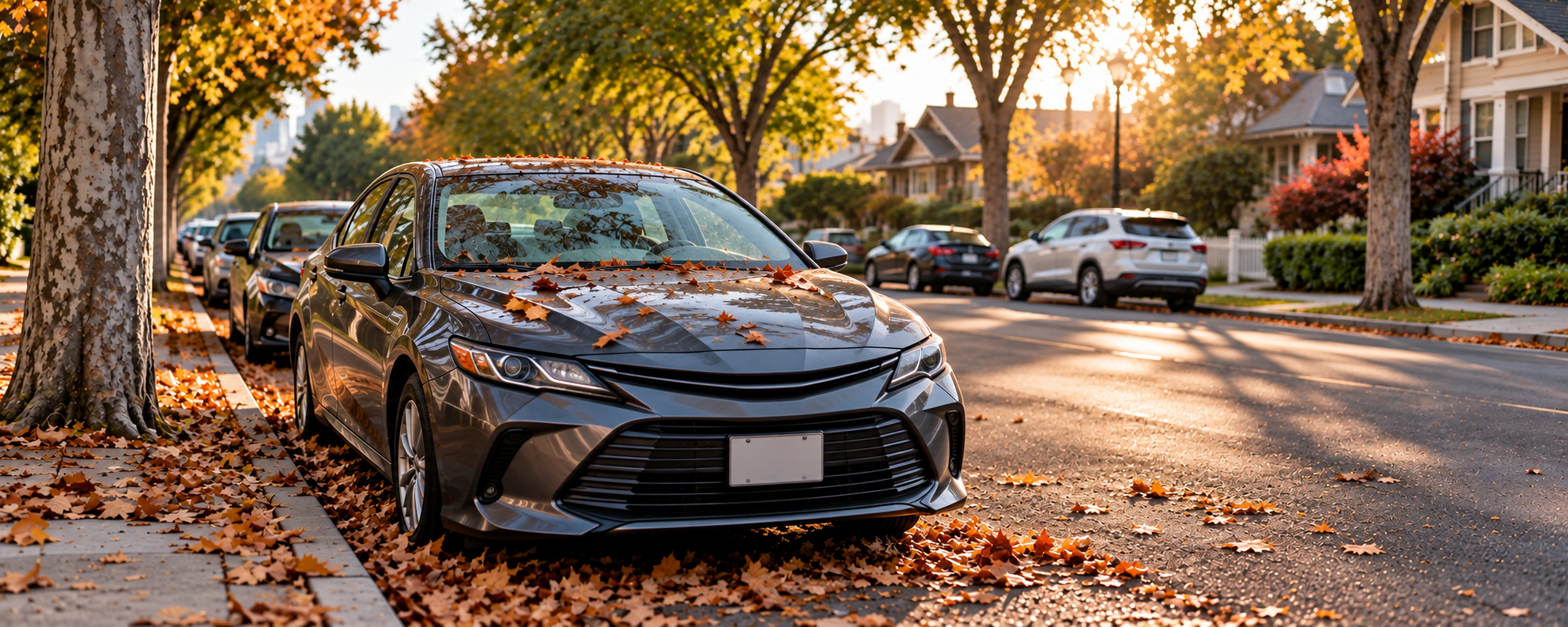
You find a legal street parking space, lock your car, and walk away.
But how long can you leave it there?
A day? A weekend? A week?
The answer isn’t determined only by whether parking was legal when you arrived. How long you can leave a car parked on the street depends on local laws, posted time limits, permits, street-cleaning schedules, overnight restrictions, temporary parking controls, and other rules that may take effect after you park.
In other words, a space can be completely legal when you leave your car—and become restricted later.
Is There a General Time Limit for Street Parking?
There isn’t one universal time limit that applies to every public street.
Cities and other jurisdictions can establish their own rules governing how long vehicles may remain parked in one location.
Some streets have clearly posted limits, such as:
- 1-hour parking
- 2-hour parking
- 4-hour parking
- Daytime-only parking
- Permit parking
- Overnight restrictions
Other streets may have no obvious time-limit sign but can still be subject to local rules governing extended or abandoned-vehicle parking.
That’s why the absence of a sign doesn’t necessarily mean you can leave a vehicle indefinitely.
How Long Can You Park When There Is No Sign?
This is where street parking becomes less obvious.
If there is no posted time restriction, drivers sometimes assume they can leave the vehicle there for as long as they want.
That isn’t necessarily the case.
A jurisdiction may have general rules limiting how long a vehicle can remain parked on a public roadway, even when there is no sign beside the space.
Those limits vary by location.
Before leaving a vehicle for several days, check the applicable local parking rules rather than assuming an unsigned curb has no time restriction.
Can You Leave Your Car Parked for Several Days?
Possibly—but you need to look beyond the moment you park.
Imagine you leave your car Sunday evening in a legal residential space.
Nothing prohibits parking Sunday night.
But Tuesday morning the street has scheduled street cleaning.
Your car may have been legally parked for more than a day before the restriction begins. Once the restricted period arrives, however, leaving the vehicle there can create a violation.
Our guide to street sweeping parking explains why drivers need to consider the next scheduled restriction, not simply the conditions when they arrive.
Does Overnight Parking Change the Answer?
It can.
Some streets allow daytime parking but restrict vehicles overnight. Others permit overnight parking only for residents with permits.
There may also be restrictions that begin early in the morning.
A car that is legal at 10:00 PM isn’t necessarily legal at 2:00 AM—or at 8:00 AM the next day.
If you’re planning to leave a vehicle overnight, our guide to residential street parking overnight explains the additional rules you should consider.
What Does a 2-Hour Parking Sign Actually Mean?
A posted time limit generally restricts how long a vehicle may occupy the regulated area during the hours and days specified by the applicable sign and local law.
But read the entire sign.
A restriction might say, for example, that a time limit applies only during particular hours or days. There may also be permit exceptions or additional restrictions on the same pole.
Our guide to 2-hour parking signs explains how to interpret these time-based restrictions.
If multiple signs apply, use our guide to reading multiple parking signs to evaluate them together.
Does Moving Your Car Reset the Parking Time?
Don’t assume that moving your vehicle a few feet—or leaving and immediately returning—automatically resets a parking limit.
Local laws may define how time-limited parking works and what a driver must do before legally returning to the same regulated area.
Some rules may apply to a particular parking space, while others can apply to a block, street segment, district, or other defined area.
The exact requirements vary.
If you reach the posted limit, check the local rule rather than trying to determine how little you need to move the vehicle to restart the clock.
What If You Have a Residential Parking Permit?
A residential permit can change which restrictions apply, but it doesn’t necessarily give you unlimited street parking.
Depending on the local program, a permit might exempt a vehicle from a particular posted time limit or authorize parking during restricted hours.
Other rules can still apply.
A permitted vehicle may still need to comply with:
- Street sweeping
- Temporary No Parking signs
- Driveway restrictions
- Hydrant clearance
- Construction restrictions
- General extended-parking rules
- Other local parking laws
Our guide to permit parking zones explains why drivers should read the entire restriction rather than treating a permit as permission to park anywhere.
What Happens If You Go on Vacation?
If you’re leaving town, don’t assume a legal street space is a safe place to leave your vehicle for the entire trip.
Consider what will happen while you’re gone.
Could street cleaning occur?
Could a permit restriction begin?
Are there general limits on how long a vehicle may remain in one location?
Could temporary signs be posted for construction, moving, utility work, or a special event?
If you’re going to be away for several days or longer, checking only today’s parking conditions isn’t enough.
You need to think about the entire period your car will remain there.
Can Temporary No Parking Signs Appear After You Park?
Temporary restrictions deserve particular attention when leaving a vehicle for an extended period.
Construction, utility work, moving activity, street maintenance, filming, special events, and other authorized uses can temporarily change curb access.
How and when temporary restrictions must be posted—and what happens to vehicles already parked there—depends on local rules.
Our guide to temporary No Parking signs explains what drivers should check when temporary notices appear.
When Does a Parked Car Become an Abandoned Vehicle?
A vehicle does not necessarily become legally “abandoned” simply because a neighbor hasn’t seen it move for a few days.
Jurisdictions can have specific definitions, procedures, and time periods governing abandoned or stored vehicles on public streets.
Those rules can consider factors beyond how long the vehicle appears to have been parked.
If a vehicle has remained in the same location for an extended period, use the applicable local definition rather than assuming a particular number of days automatically makes it abandoned.
Can Someone Report a Car That Has Been Parked Too Long?
Many local governments provide ways for residents to report vehicles they believe have been abandoned or parked in violation of local regulations.
A report itself doesn’t necessarily establish that the vehicle is illegally parked.
The relevant authority determines whether the vehicle violates applicable rules and what enforcement action, if any, is appropriate.
This distinction matters in residential neighborhoods where one person may simply dislike having another vehicle parked in front of their home.
As we explain in Can Someone Park in Front of Your House?, the public curb generally isn’t reserved for the closest homeowner simply because it sits beside that property.
Can You Get a Ticket Even If Parking Was Legal When You Arrived?
Yes, if a restriction later takes effect and your vehicle remains there in violation of that restriction.
This is one of the most important concepts in street parking:
Legal when parked does not necessarily mean legal for the entire time the car remains there.
Suppose you park at 6:00 PM.
The space may be legal at that moment, but a restriction could begin later because of:
- Overnight parking rules
- Street cleaning
- Morning rush-hour restrictions
- Permit hours
- Loading-zone hours
- Posted time limits
- Temporary restrictions
Street parking is often a time-and-location decision, not just a location decision.
Before Leaving Your Car for a Long Time
If you expect to leave your vehicle on the street for more than a few hours, look ahead.
Start with the signs around the space. Check every applicable day and time—not only the current one.
Then consider restrictions that may not appear on a nearby sign, including general local limits on extended street parking.
If you’re leaving the car overnight or for several days, check what happens tomorrow, the following morning, and throughout the period you expect the vehicle to remain there.
A useful question is:
“Will this still be legal when I come back?”
That’s different from simply asking whether you can park there right now.
Where ParkClear Fits In
Time is one of the reasons ParkClear goes beyond answering a parking question only at the moment you arrive.
ParkClear helps drivers interpret parking signs and location-based rules to get a clear Yes or No answer to “Can I park here?”
Drivers can also check a future date and time, which can help when a parking restriction changes later.
For example, a space might return a different answer tomorrow morning because of street cleaning or another scheduled parking restriction.
And when the posted rules themselves are confusing, ParkClear’s parking sign scanner can help drivers interpret the sign.
When parking duration depends on a local rule that isn’t communicated on a sign, drivers should also verify the applicable official local regulation.
Think About When You Return, Not Just When You Park
Finding an open, legal parking space is only the beginning if you’re planning to leave your vehicle there.
The real question is whether the space will remain legal for the entire period your car is parked.
Read the signs. Check the schedule. Look for permits and temporary restrictions. Consider local extended-parking rules.
And if you’re leaving the vehicle overnight, for a weekend, or while traveling, don’t evaluate only today’s conditions.
Check the future parking rules before you walk away.
Download ParkClear
Confused about whether you can park? Download ParkClear to scan parking signs or use your location to get a clear Yes or No answer to “Can I park here?”
Parking regulations vary by jurisdiction. Always follow posted signs and applicable local laws, and check official local rules when necessary.