
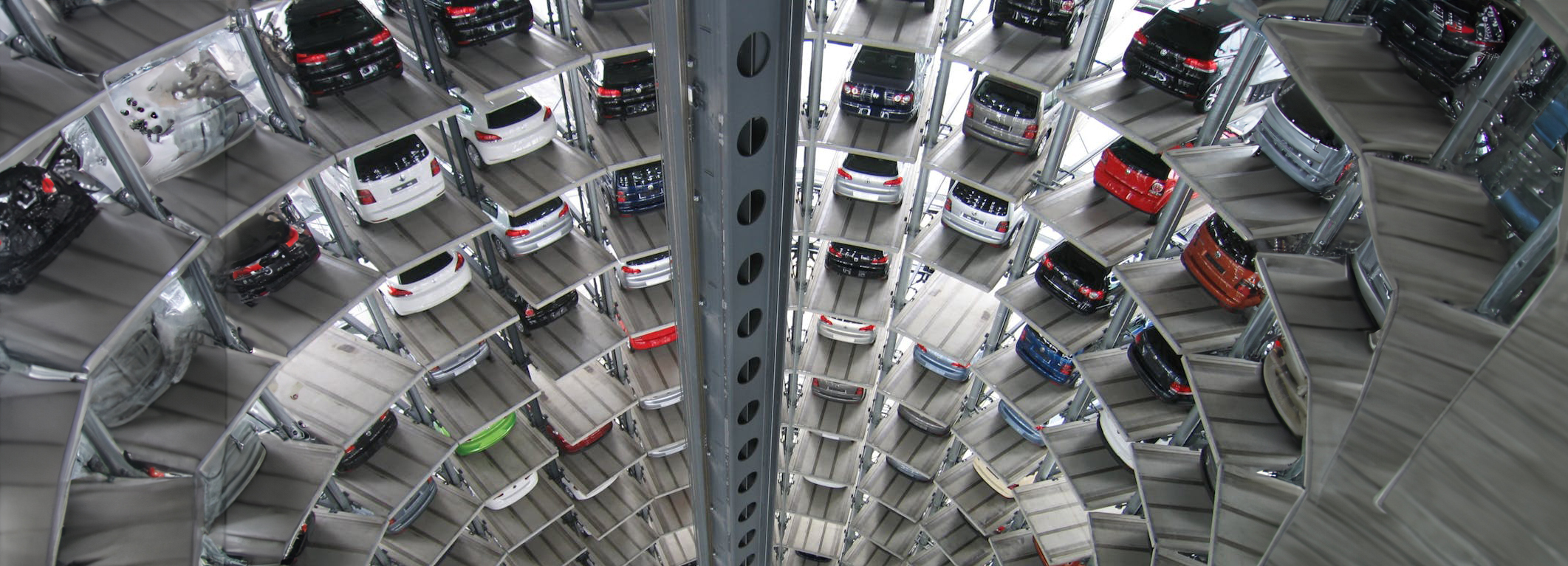
Street parking is changing in cities around the world. What once depended primarily on coin-operated meters, printed permits and static signs is increasingly supported by digital payments, data-driven pricing and connected parking systems.
But parking innovation isn’t simply about making payments easier or finding an empty space.
Cities must also decide how limited curb space should serve residents, visitors, deliveries, public transportation and other street users.
From San Francisco’s demand-responsive parking meters to Singapore’s digital payment system, several approaches illustrate how parking management is evolving.
Here are some of the most interesting parking innovations around the world—and what they mean for drivers.
1. San Francisco: Parking Prices That Respond to Demand
San Francisco introduced its SFpark pilot in 2011 to explore a different approach to managing public parking.
Instead of charging the same meter rate regardless of demand, the city tested adjusting prices according to how heavily parking spaces were being used.
When parking demand was particularly high, rates could increase. When spaces were underused, rates could decrease.
The goal was to encourage drivers to consider less-congested blocks and reduce the amount of time spent searching for parking.
The original pilot covered approximately 7,000 metered spaces and several city-owned parking facilities.
Following the pilot, San Francisco expanded its demand-responsive parking-pricing approach.
What makes this innovative?
Rather than treating every parking space as equally valuable throughout the day, demand-responsive pricing allows cities to adjust rates based on actual parking patterns.
However, variable pricing doesn’t change the underlying parking regulations.
A driver must still follow posted time limits, street-cleaning schedules and other restrictions, regardless of the meter rate.
For more information about how payment schedules and parking regulations interact, read our guide to parking meter rules after hours.
2. Amsterdam: License Plate-Based Parking
Amsterdam has adopted a digital approach to parking payments and verification.
At participating on-street parking machines, drivers enter their license plate number when paying.
The machine doesn’t need to issue a traditional paper parking ticket because payment is associated with the vehicle’s registration.
Drivers can also use supported mobile payment applications.
The city uses vehicles equipped with scanning technology to check whether parked vehicles have valid payment records.
What makes this innovative?
License plate-based parking reduces reliance on physical tickets displayed inside vehicles.
It also allows parking payment and verification to operate through connected digital systems.
However, automated payment checks are not the same as understanding every parking regulation.
Drivers must still observe the rules governing their specific location, including residential permits, time restrictions and prohibited parking areas.
Our guide to common parking violations explains why compliance involves more than paying a meter.
3. Singapore: Digital Parking Without Paper Coupons
Singapore offers another example of how technology can simplify parking payments.
Its government-supported Parking.sg application allows motorists to pay for parking digitally instead of using traditional paper parking coupons.
Drivers enter their vehicle number, select the appropriate car park code and indicate their intended parking duration.
The application calculates charges and allows users to extend eligible parking sessions remotely.
If a driver ends a session early, the system can calculate a refund for unused time.
Parking.sg also offers notifications before a parking session expires.
What makes this innovative?
Singapore’s approach brings payment, time tracking and parking-session management together in one digital experience.
The country’s Land Transport Authority is also developing roadside electronic parking functionality through its next-generation in-vehicle system.
This planned functionality is intended to allow motorists with compatible equipment to initiate roadside parking payments through an onboard touchscreen.
These developments illustrate how parking payments may become more closely integrated with vehicles and transportation infrastructure.
They don’t eliminate the need to understand the rules governing where and when parking is permitted.
4. Digital Residential Parking Permits
Parking innovation isn’t limited to meters and payment applications.
Cities are also modernizing how residents and visitors obtain parking permits.
Digital permit systems can help municipal agencies manage applications, verify eligibility and maintain records associated with particular vehicles or residential addresses.
Amsterdam, for example, provides online services for residents and visitors to manage qualifying parking permits.
Digital administration can make permit programs more convenient, but the permits themselves remain subject to local regulations.
A permit issued for one district may not authorize parking in another.
Similarly, a residential permit generally doesn’t override every street-cleaning or safety-related restriction.
For a U.S. example, see our Los Angeles residential parking permit guide.
5. The Rise of Digital Curb Management
As urban transportation changes, cities are reconsidering how curb space should be allocated.
Traditional curbside parking must now compete with delivery vehicles, rideshare pickups, passenger loading, transit operations and other activities.
A curb that serves commercial deliveries in the morning may be better suited to passenger loading or general parking later in the day.
Digital curb-management systems help cities organize and communicate these changing regulations.
The Open Mobility Foundation developed the Curb Data Specification, an open standard that helps cities describe curb locations, regulations and activity through digital systems.
This creates opportunities for transportation providers and technology companies to work with more consistent curbside information.
For a broader explanation of these developments, read our article on the future of urban parking.
6. Why Digital Parking Rules Matter
Many parking technologies focus on payment, occupancy or enforcement.
Yet drivers often face a more fundamental challenge: understanding whether they’re legally permitted to park.
Consider a street with a two-hour parking limit, a residential permit restriction and a scheduled street-cleaning period.
Each rule may apply at a different time.
Even if the city digitizes its parking payments, the driver still needs to interpret the restrictions together.
Digital parking regulations can help organize this information, but their usefulness depends on accurate data, clear geographic boundaries and up-to-date schedules.
Our guide to multiple parking signs explains why interpreting overlapping restrictions can be difficult.
7. Can Parking Innovation Reduce Urban Congestion?
Some parking-management strategies are designed to reduce the amount of time drivers spend searching for spaces.
San Francisco’s SFpark pilot, for example, evaluated whether demand-responsive pricing could improve parking availability and reduce unnecessary driving.
The city’s evaluation reported reductions in parking-search time and vehicle miles traveled within the pilot areas.
However, results from one city’s program shouldn’t automatically be assumed to apply everywhere.
Outcomes depend on local parking demand, transportation alternatives, pricing policies and how a program is implemented.
Digital curb management may also help cities coordinate loading activities and other competing street uses.
These approaches illustrate why parking policy is increasingly connected to broader urban transportation planning.
8. What These Innovations Mean for Drivers
Although cities are adopting different technologies, several common themes are emerging.
Parking payments are becoming more digital. Permit administration is moving online. Some cities use data to adjust parking prices, while others are developing more structured digital information about curbside regulations.
For drivers, these developments can create more convenient ways to interact with parking systems.
But convenience doesn’t automatically mean that parking rules have become simpler.
A mobile payment confirmation doesn’t override a No Parking sign. A digital permit doesn’t necessarily exempt a vehicle from street cleaning. And an empty space isn’t necessarily a legal parking space.
Understanding the applicable regulations remains essential.
9. Where ParkClear Fits Into the Global Parking Landscape
ParkClear focuses on a specific challenge within modern parking: helping drivers understand municipal street-parking regulations.
While some parking applications process payments or provide occupancy information, ParkClear uses parking-sign scanning and location-based information to help answer a different question:
Can I park here?
ParkClear also offers future date and time checks and parking-expiration reminders.
These features help drivers consider not only the regulations currently in effect but also restrictions that may apply later.
ParkClear doesn’t identify vacant parking spaces, process parking payments or provide turn-by-turn navigation.
Instead, it helps make complicated street-parking rules easier to interpret.
For more information about the technology behind modern parking systems, explore our article on the evolution of parking technology.
10. The Future of Parking Is About Better Information
San Francisco, Amsterdam and Singapore demonstrate that parking innovation can take several different forms.
One city may focus on demand-responsive pricing. Another may modernize license plate-based payments. Others may digitize permits or develop more connected curb-management systems.
There isn’t a single technology that solves every parking challenge.
For cities, progress involves coordinating transportation needs and communicating regulations effectively.
For drivers, it means having the information needed to make the right parking decision at the right time.
As parking systems become increasingly connected, making municipal parking rules easier to understand will remain an important part of the experience.
Confused about whether you can park? Download ParkClear to scan parking signs or use your location to get a clear Yes or No answer to “Can I park here?”
Parking regulations vary by jurisdiction. Always follow posted signs and applicable local laws, and check official local rules when necessary.