
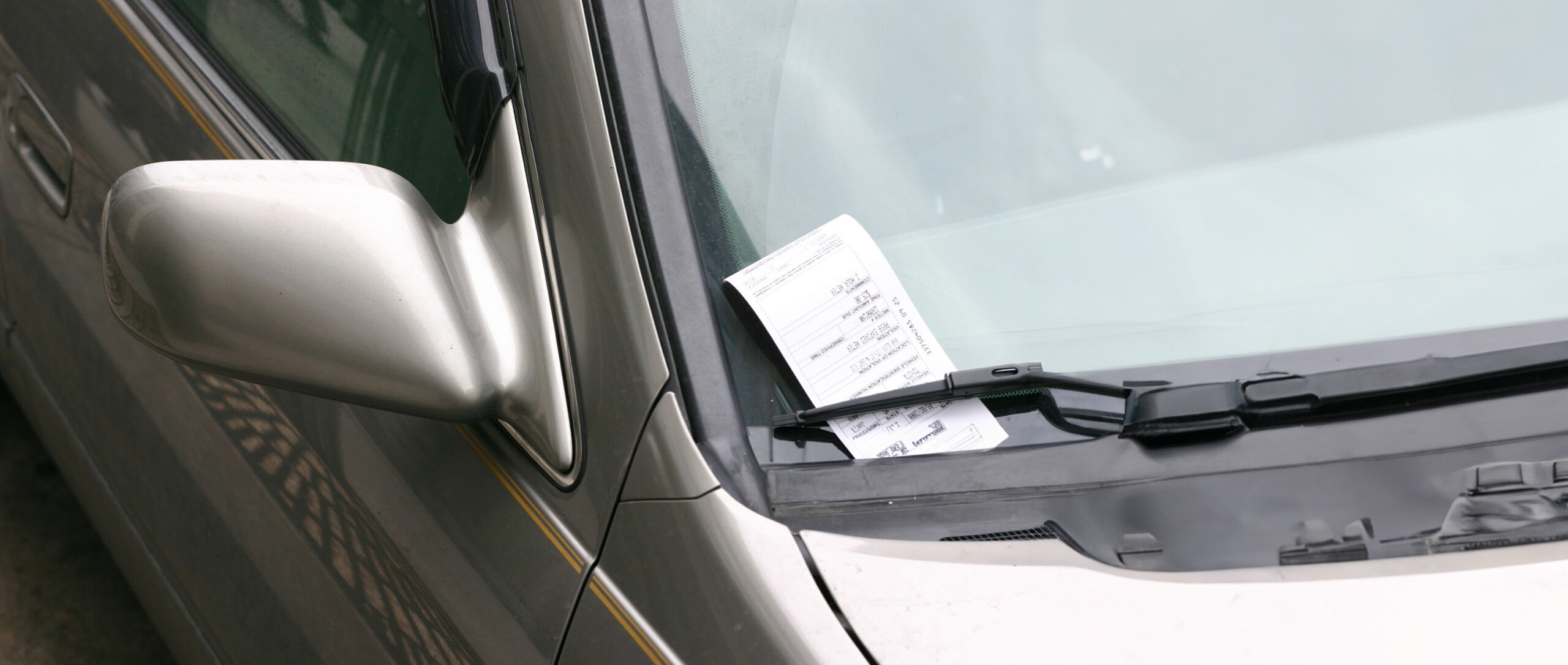
Parking tickets can feel unpredictable.
You park on a street where other cars are parked. You check the closest sign. You pay the meter. Everything seems fine.
Then you return to a citation on your windshield.
The problem is that legal street parking can depend on much more than whether a space looks available.
Parking signs, time limits, street cleaning, permit requirements, curb markings, meters, temporary restrictions, driveways, crosswalks, hydrants, and other local rules can all affect whether a vehicle is legally parked.
And the exact rules vary by jurisdiction.
Rather than trying to rank parking violations nationwide—which can be misleading because cities enforce different laws—here are some of the most common types of parking violations drivers should know about and what to check before leaving your vehicle.
1. Parking During Street Cleaning
Street-cleaning restrictions are easy to miss because they may apply for only a few hours on a particular day.
A street could allow parking almost all week and prohibit it during one specific cleaning period.
For example:
NO PARKING — STREET CLEANING
TUESDAY
8 AM–10 AM
If the restriction applies to your section of curb, parking there during that period can result in a citation.
One particularly risky assumption is that you’re allowed to park as soon as the street sweeper passes.
That isn’t necessarily true.
The posted restriction may remain in effect until the stated ending time regardless of when the cleaning vehicle actually passes.
See ParkClear’s guide to street cleaning parking signs for a deeper explanation.
2. Exceeding a Posted Parking Time Limit
Time-limited parking is another common source of confusion.
A sign might allow:
2 HOUR PARKING
8 AM–6 PM
That doesn’t simply mean parking is allowed. It means parking is subject to the conditions and time limit shown on the sign.
Drivers should check:
- When the time limit applies
- Which days it applies
- Whether a permit creates an exception
- Whether payment is also required
- Whether another restriction begins later
A space that allows two-hour parking at noon could potentially become a No Parking zone later in the day.
That’s why drivers need to consider what the rules will be before they return, not only when they first park.
Read ParkClear’s guide to 2-hour parking signs for more information.
3. Parking Without a Required Permit
Residential and other permit zones can be deceptively easy to overlook.
A street may look like ordinary public street parking while a nearby sign limits parking to vehicles with a particular permit.
Other permit zones may allow non-permit vehicles to park for a limited period while permit holders receive different privileges.
The wording matters.
Don’t assume that being in a residential neighborhood automatically means unrestricted parking.
Check whether a permit is required, when the requirement applies, whether non-permit vehicles receive an exception, and whether other restrictions affect the same curb.
ParkClear’s guide to permit parking signs explains what to look for.
4. Parking Too Close to a Fire Hydrant
A parking space doesn’t need a meter, painted curb, or No Parking sign to be subject to a restriction.
Fire hydrants are a good example.
Jurisdictions can establish required clearance around hydrants so emergency responders can access them when necessary.
Drivers should not assume a universal distance applies everywhere.
And an unpainted curb doesn’t automatically make the location legal.
If you’re parking near a hydrant, check the applicable local requirement and make sure your vehicle satisfies it.
See fire hydrant parking rules for more information.
5. Blocking a Driveway
An open section of curb in front of a driveway can look tempting, especially on a crowded residential street.
But parking in a way that unlawfully blocks or interferes with driveway access can result in enforcement.
Don’t assume you’re safe simply because:
- The driveway appears unused
- The property owner isn’t home
- The curb isn’t painted
- There isn’t a No Parking sign
- Another vehicle was previously parked there
Local rules determine what is permitted.
Our guide to parking in front of a driveway explains what drivers should consider before leaving a vehicle.
6. Parking Too Close to a Crosswalk or Intersection
Some parking restrictions are created by traffic laws rather than a sign directly beside the parking space.
Crosswalks and intersections are important examples.
A driver might see an unpainted, apparently open curb near a corner and assume it is available.
But local rules may require vehicles to maintain clearance from crosswalks, intersections, traffic-control devices, or other roadway features.
Requirements can differ by jurisdiction, so don’t rely on a distance you remember from another city.
See ParkClear’s guides to crosswalk parking rules and intersection parking rules for more information.
7. Misreading No Parking, No Standing, or No Stopping
These three restrictions sound similar, but drivers shouldn’t treat them as interchangeable.
Depending on local law, a No Parking restriction may differ from No Standing, while No Stopping can be more restrictive still.
The precise definitions and permitted exceptions can vary by jurisdiction.
That’s why seeing one of these signs should trigger a closer look at exactly what the sign says rather than a general assumption that they all mean the same thing.
ParkClear explains the distinctions in our guide to No Parking vs. No Standing vs. No Stopping.
8. Ignoring Temporary No-Parking Restrictions
You may have legally parked on the same street dozens of times.
That doesn’t guarantee you can park there today.
Temporary parking restrictions can appear because of:
- Construction
- Street work
- Utility work
- Moving activity
- Special events
- Film production
- Emergency operations
- Other temporary curb uses
The important details are usually the effective date, time, location, and restriction.
A temporary restriction can change the normal rules for a space, so scan the area before relying on what you remember from previous visits.
Read our guide to temporary no parking signs before parking around temporary restrictions.
9. Parking in a Loading or Passenger Loading Zone
Loading zones can be especially confusing because the applicable rules may depend on the type of zone, posted hours, vehicle activity, jurisdiction, and nearby signs.
A loading area should not be treated as ordinary parking simply because no one is currently using it.
Likewise, don’t assume that a loading restriction applies around the clock unless the signs or local regulations indicate that it does.
Read the entire sign and determine what applies at the current time.
See ParkClear’s guides to loading zone parking rules and passenger loading zone rules for more information.
10. Parking in a Bus Zone
Bus zones need to remain available for transit operations and passenger access.
Drivers should not treat an apparently empty bus zone as an ordinary parking space simply because no bus is currently present.
Look for posted signs, curb markings, pavement markings, and other indicators identifying the restricted area.
If you’re uncertain where the restriction begins or ends, check the entire curb before leaving your vehicle.
See ParkClear’s guide to bus zone parking rules.
11. Misunderstanding Parking Meters
A meter tells you important information, but it doesn’t necessarily tell you everything you need to know about the space.
Paying a meter doesn’t override another applicable parking restriction.
A metered space could also be affected by:
- Street cleaning
- Time limits
- Rush-hour restrictions
- Temporary signs
- Tow-away periods
- Location-based restrictions
- Other posted rules
The reverse is also important.
A meter that isn’t currently collecting payment doesn’t automatically mean parking is unrestricted.
Always read the surrounding signs before assuming the meter tells the entire story.
12. Parking in a Tow-Away Zone
A tow-away warning deserves particular attention because the consequence may extend beyond a parking citation.
Some tow-away restrictions apply continuously, while others activate only during particular days or hours.
Read the entire sign.
For example, a space might allow parking during much of the day but become a tow-away zone during peak traffic hours.
See our guide to tow-away zone signs for help understanding these restrictions.
13. Misreading Parking Sign Arrows
Sometimes the driver understands the rule but applies it to the wrong section of curb.
That’s where arrows matter.
Directional arrows can help indicate where a parking restriction begins, ends, or continues.
Two vehicles parked a short distance apart can potentially be governed by different restrictions depending on their positions relative to the sign.
Before walking away, check nearby signs in both directions.
ParkClear’s guide to parking sign arrows explains how to work through directional restrictions.
14. Reading One Sign and Ignoring the Others
This may be one of the biggest sources of parking confusion.
A pole might display:
2 HOUR PARKING
9 AM–6 PM
along with:
NO PARKING — STREET CLEANING
TUESDAY
10 AM–12 PM
and another permit or directional restriction.
The signs aren’t necessarily contradicting one another.
They may describe different rules applying at different times or under different conditions.
The right question isn’t:
“Which sign should I follow?”
It’s:
“Which of these rules apply to my vehicle right now?”
Our guide to multiple parking signs on one pole explains how to work through overlapping restrictions.
Why Do Drivers Get Parking Tickets Even When a Space Looks Legal?
Because appearance alone isn’t enough to determine whether street parking is permitted.
A completely ordinary-looking curb can still be affected by:
time + day + signs + arrows + permits + curb markings + temporary restrictions + local law.
Some restrictions are posted directly beside the space.
Others may depend on physical features such as a driveway, crosswalk, intersection, or fire hydrant.
And some change according to the time of day.
That’s why the simple question “Can I park here?” can require considering several pieces of information at once.
How Can You Reduce Your Risk of a Parking Ticket?
Develop a consistent routine before leaving your vehicle.
Check the closest signs—but don’t stop there.
Look farther along the curb for additional signs. Check directional arrows. Look at curb markings. Confirm the day and time. Look for temporary restrictions. Check the meter if there is one. Consider nearby hydrants, driveways, intersections, and crosswalks.
Most importantly, consider whether the rule will change while you’re away from the car.
For a complete pre-parking checklist, see our guide to how to avoid parking tickets.
How ParkClear Helps Drivers Understand Parking Rules
Parking regulations can become difficult to interpret when several rules apply to the same location.
ParkClear is designed to simplify that decision.
Drivers can use ParkClear’s parking sign scanner to photograph confusing parking signs. ParkClear analyzes the signage together with relevant location information to help provide a clear Yes or No parking answer.
ParkClear can also help drivers check parking rules for a future date and time and set parking-expiration reminders.
It doesn’t tell drivers where vacant parking spaces are located or provide turn-by-turn navigation to open spaces.
Its purpose is much more focused:
helping drivers understand whether they’re allowed to park where they are.
Know the Rule Before You Walk Away
Most parking violations aren’t best understood as a nationwide ranking.
Parking laws and enforcement practices vary too much from one jurisdiction to another for that to be genuinely useful.
What’s more useful is recognizing the situations that deserve an extra check.
Street cleaning.
Meters.
Time limits.
Permit zones.
Hydrants.
Driveways.
Crosswalks.
Loading zones.
Temporary restrictions.
Tow-away periods.
And multiple signs applying to the same curb.
When you’re unsure, don’t make the decision based on whether other cars are parked there.
Check the rules that apply to your vehicle, at your location, at that time.
Confused about whether you can park? Download ParkClear to scan parking signs or use your location to get a clear Yes or No answer to “Can I park here?”
Parking regulations vary by jurisdiction. Always follow posted signs and applicable local laws, and check official local rules when necessary.