
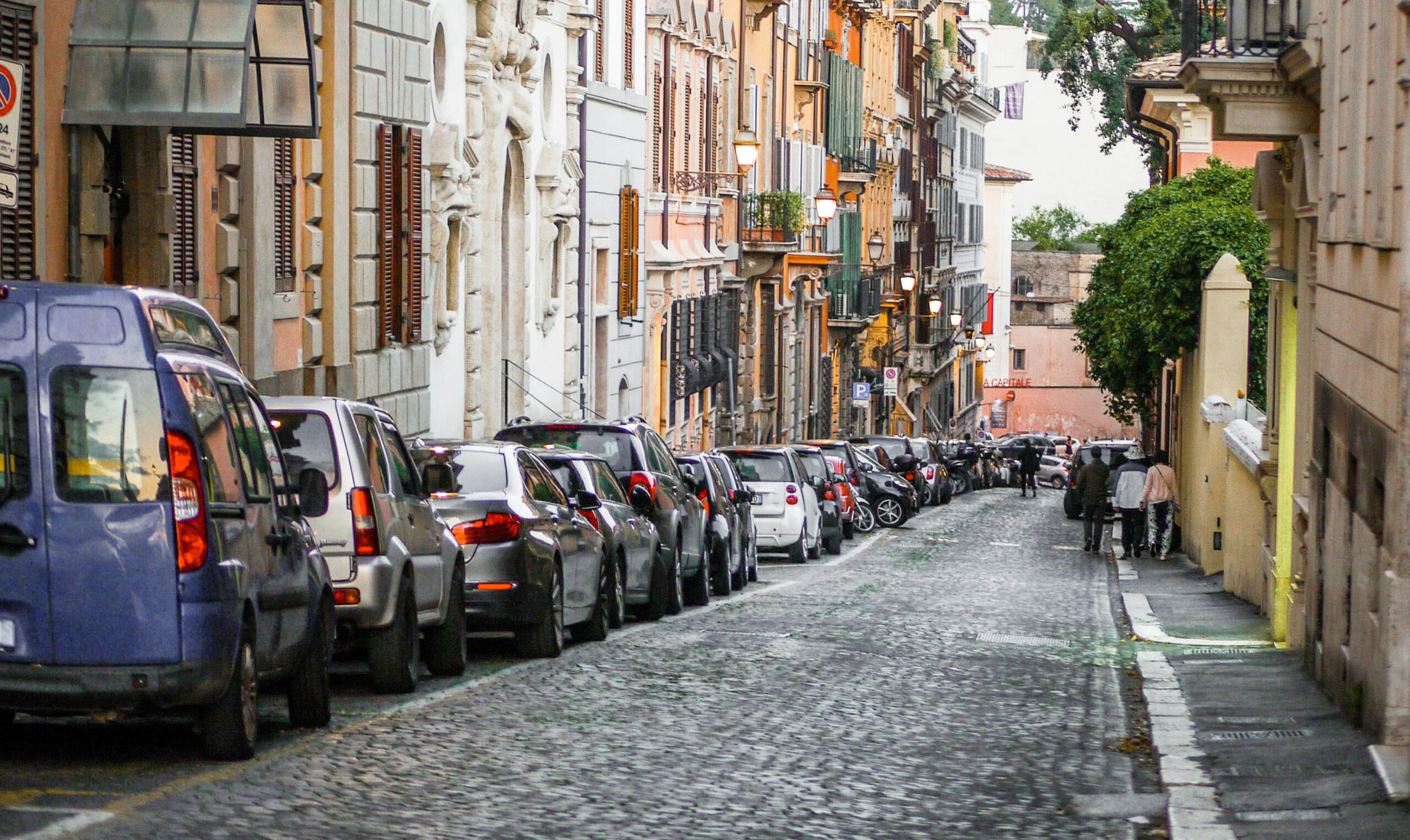
Few things are more frustrating than returning to your car and finding a parking ticket on the windshield.
Sometimes the reason is obvious: an expired meter or a clearly marked No Parking zone. Other times, the violation comes from a restriction that was easy to overlook—a street-cleaning window, permit requirement, temporary sign, directional arrow, or second parking sign farther down the pole.
The challenge is that street parking rules rarely depend on just one thing.
Where you parked, when you parked, how long you stay, the signs around you, curb markings, temporary restrictions, and local regulations can all affect whether parking is permitted.
Before you walk away from your car, use this 12-point checklist to reduce the chance of an unpleasant surprise when you return.
1. Read Every Parking Sign Near Your Car
Don’t stop reading after the first sign.
Cities often place several parking regulations on the same pole because different rules apply at different times.
For example, one sign might prohibit parking during morning rush hour while another allows two-hour parking later in the day. A third could establish street-cleaning restrictions on a particular weekday.
When several rules appear together, identify:
- The restriction
- Days it applies
- Start and end times
- Directional arrows
- Permit exceptions
- Vehicle-specific rules
- Whether another sign creates an additional restriction
ParkClear’s guide to multiple parking signs on one pole explains how to separate overlapping restrictions and determine which rule applies.
If you’re unsure where to start, see how to read parking signs.
2. Check the Day and Time
A parking space can be legal at 2:00 PM and prohibited at 5:00 PM.
That’s because many street-parking rules are time dependent.
You might encounter a sign such as:
NO PARKING
7 AM–9 AM
MON–FRI
followed by:
2 HOUR PARKING
9 AM–6 PM
The physical location hasn’t changed, but the applicable rule has.
Always compare the posted restriction with the current day and time—and think about what the rule will be while your vehicle remains parked.
This is particularly important when parking near the end of one regulatory period and the beginning of another.
3. Don’t Ignore Parking Sign Arrows
A parking restriction may not apply to the entire block.
Arrows can indicate where a restriction begins, ends, or continues.
That means two vehicles parked relatively close together could potentially fall under different rules.
Before leaving your vehicle, look at nearby signs in both directions and determine whether an arrow applies to your section of curb.
Our guide to parking sign arrows explains how directional parking signs work and why your vehicle’s position relative to the sign matters.
4. Check for Street-Cleaning Restrictions
Street cleaning is one of the easiest restrictions to overlook because a street may otherwise appear completely normal.
A sign may prohibit parking only during a narrow window on a particular day—for example:
NO PARKING
STREET CLEANING
10 AM–12 PM
TUESDAY
If you’re parking outside that window, the street-cleaning restriction may not apply. But if your car remains there when the restricted period begins, you could potentially receive a citation.
Don’t assume that parking becomes legal simply because a street sweeper has already passed. The posted restriction may remain in effect for the entire stated period.
Read our guide to street cleaning parking signs for more information.
5. Check the Meter—and the Signs Around It
Paying a parking meter does not necessarily mean you’ve satisfied every parking rule affecting that space.
The meter controls one part of the parking conditions.
Nearby signs may establish additional restrictions.
Before paying, check:
- Meter operating hours
- Posted time limits
- Nearby No Parking restrictions
- Street-cleaning periods
- Tow-away periods
- Permit requirements
- Temporary signs
- Other restrictions applying to that curb
And don’t assume an inactive meter automatically means unrestricted parking.
Our guides explain what to consider when parking at a meter after hours and what happens when you’re dealing with an expired parking meter.
6. Watch Your Parking Time Limit
A sign reading:
2 HOUR PARKING
doesn’t simply tell you that parking is allowed.
It also establishes how long you may remain there during the applicable period.
Look for additional information specifying:
- Days
- Hours
- Permit exemptions
- Meter requirements
- Whether another restriction begins later
Our guide to the 2-hour parking sign explains how time-limit signs work and why the surrounding signs matter.
ParkClear also includes a parking-expiration reminder so drivers can keep track of when their parking period is approaching its end.
7. Check for Permit Parking
Residential streets can look unrestricted even when a permit rule applies.
A sign might allow parking only for vehicles displaying a particular permit, restrict non-permit vehicles to a shorter period, or apply only during specified hours.
Permit rules vary substantially between jurisdictions.
Never assume that a residential street means unrestricted public parking.
If you encounter one of these signs, our guide to permit parking signs explains what drivers should look for before leaving their vehicle.
8. Understand the Curb Color
Painted curbs can communicate important restrictions—but their meanings aren’t necessarily identical everywhere.
Depending on the jurisdiction, curb colors may identify passenger loading, commercial loading, accessible parking, short-term parking, or areas where stopping or parking is prohibited.
And a curb color should not necessarily be interpreted by itself.
Always check nearby signs because they may specify the applicable hours, vehicle types, or additional restrictions.
See ParkClear’s guide to red, yellow, white, green, and blue curb colors before assuming a painted curb is safe to use.
9. Keep Clear of Driveways, Hydrants, Crosswalks, and Intersections
Not every parking restriction requires a sign directly beside your car.
Local laws can prohibit or restrict parking near certain physical features of the street.
Common examples include:
- Driveways
- Fire hydrants
- Crosswalks
- Intersections
- Corners
- Bus stops
- Railroad crossings
The required distance can vary by jurisdiction, so avoid relying on a universal number you’ve heard from another city.
ParkClear has detailed guides covering parking in front of a driveway, parking near a fire hydrant, crosswalk parking rules, and parking near an intersection.
When in doubt, check the applicable local rule.
10. Know the Difference Between No Parking, No Standing, and No Stopping
These signs may sound similar, but they don’t necessarily mean the same thing.
A jurisdiction may distinguish between:
Parking — leaving a vehicle standing beyond certain permitted purposes.
Standing — stopping for purposes such as picking up or dropping off passengers.
Stopping — bringing the vehicle to a halt, subject to limited exceptions such as traffic conditions or emergencies.
The precise legal definitions can vary, which is why drivers should not treat these terms as interchangeable.
ParkClear’s guide to No Parking vs. No Standing vs. No Stopping explains the distinctions and what drivers should check.
11. Look for Temporary No-Parking and Tow-Away Signs
One of the easiest ways to misread a familiar street is to assume today’s rules are the same as yesterday’s.
Temporary restrictions can appear because of:
- Construction
- Street maintenance
- Moving activity
- Special events
- Utility work
- Film production
- Emergency operations
- Other temporary curb uses
A space that is normally legal may therefore become temporarily restricted.
Look carefully for temporary notices attached to poles, trees, barricades, or other approved locations.
Check the effective date and time, not merely the words “No Parking.”
Our temporary no parking signs guide explains what to examine, while the tow-away zone signs guide covers another restriction drivers should take seriously.
12. Ask One Final Question Before Walking Away
Before locking your car, take a few seconds and ask:
“Is there anything else affecting this space?”
Look up and down the curb.
Check the nearest signs.
Look for arrows.
Check the curb color.
Check the meter.
Look for temporary notices.
Think about how long you’ll be gone.
And make sure another restriction won’t begin before you return.
Those extra few seconds can catch the second or third rule that is easy to miss when you’re focused only on finding somewhere to leave the car.
Why Parking Tickets Can Be So Easy to Get
The difficulty isn’t necessarily that individual parking rules are complicated.
It’s that several rules can interact.
Imagine parking at 3:30 PM in a space displaying:
2 HOUR PARKING
9 AM–4 PM
and:
NO PARKING
4 PM–7 PM
Looking only at the first sign might suggest that you can stay until 5:30 PM.
But the second restriction changes the situation at 4:00 PM.
This is why parking decisions should consider all applicable restrictions together, not one sign in isolation.
Can ParkClear Help You Avoid Parking Tickets?
ParkClear is designed to help drivers understand municipal street-parking regulations before they walk away from their vehicle.
Instead of trying to manually combine:
location + parking signs + day + time + arrows + restrictions
ParkClear uses location-based parking-rule information and parking-sign analysis to help provide a clear:
YES — parking is permitted
or
NO — parking is not permitted
for the relevant location and time.
You can also use ParkClear to check parking rules for a future date and time, which can help when planning ahead, and set a parking reminder so you don’t lose track of an applicable parking period.
ParkClear does not tell you where vacant parking spaces are located. Its purpose is different:
helping you understand whether you’re allowed to park where you are.
A Better Parking Habit: Check Before You Walk Away
Avoiding parking tickets isn’t about memorizing every parking law in every city.
It’s about developing a consistent habit.
Before leaving your vehicle, check:
the signs, the arrows, the curb, the meter, the day, the time, temporary restrictions, and the rules applying to your exact location.
The more complicated the street, the more important that final check becomes.
And when the signs aren’t clear, technology can help simplify the decision.
Confused about whether you can park? Download ParkClear to scan parking signs or use your location to get a clear Yes or No answer to “Can I park here?”
Parking regulations vary by jurisdiction. Always follow posted signs and applicable local laws, and check official local rules when necessary.



One Comment